
Banting House National Historic Site
Banting House, named for its most famous resident, Sir Frederick Banting, was originally built as a modest home for Dr. John Wright in 1900. This yellow brick house was then purchased by Rowland Hill, a local shoe merchant in 1914, who rented to Banting in June 1920.
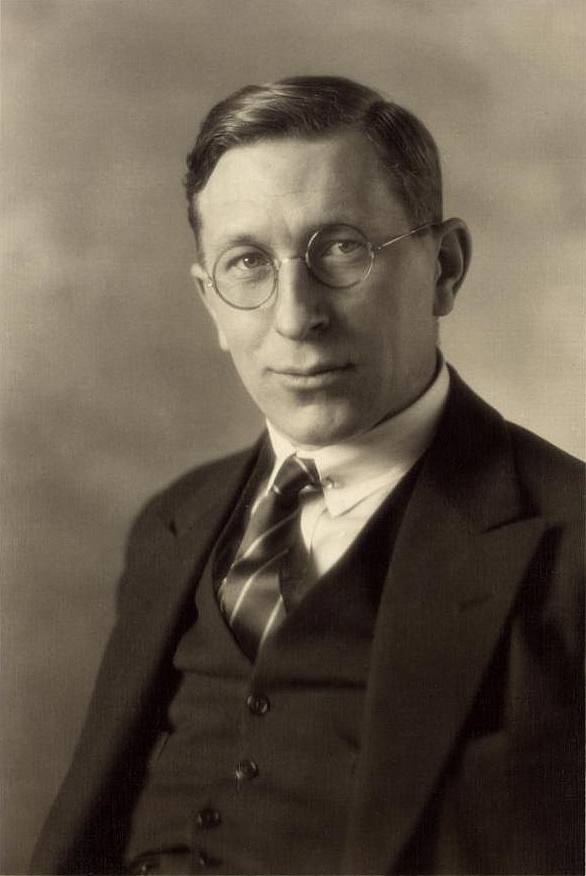
Sir Frederick Banting was born in Alliston, ON, in Simcoe County in 1891. He moved to Toronto in his youth, studying medicine at the University of Toronto specializing in surgery. During World War I he enlisted in the Canadian Expeditionary Force, joining the Royal Canadian Army Medical Corps in 1915. When he returned to Canada after armistice, he moved to London and into his home at 442 Adelaide Street. He would ultimately live here for ten months starting in June 1920, operating an unsuccessful doctor’s office out of part of the home. His difficulties as a private physician led him to become a lecturer and researcher at Western University. On the evening of October 30, 1921, he was preparing for a lecture on the pancreas and fell asleep reading a scientific journal on the subject. According to Banting, he woke up in the middle of the night with the idea that insulin could be the cure for diabetes. Banting’s theory on insulin was based on other research that was being conducted at the time, and he applied for medical research funding from his alma mater. He moved back to Toronto where he began research at the University of Toronto in 1921 assisted by John Macleod, a University of Toronto professor, student Charles Best, and biochemist James Collip. In late 1921, the four succeeded in creating insulin and the first injection was given to 14-year-old Leonard Thompson at Toronto General Hospital. The success of insulin to treat diabetes was one of the most significant medical advancements of the century and Banting and Macleod won the Nobel Prize in Physiology or Medicine in 1923. Banting would continue working with diabetes patients, establishing the Banting and Best Diabetes Centre in 1924, and working with the Canadian Associate Committee on Aviation Medicine Research and the Canadian Associate Committee on Medical Research. During his later years, he was also an avid painter, spending time with Group of Seven artist A.Y. Jackson. Banting served as a Lieutenant in the Canadian Airforce during the Second World War. He died in a plane crash on February 21, 1941 in Newfoundland.
After Banting’s discovery there was great energy in London to be a part of the story. Newspapers visited London, and the Detroit Free Press named Banting’s former residence the “Birthplace of Insulin.” Banting was honoured by Western University with an honorary doctoral degree in law studies in 1924, and Banting High School was opened in 1969.
Banting’s former residence has attracted local and national attention for many years. In 1970 the house received an official plaque from London declaring it a historic building. In 1981 the Canadian Diabetes Association purchased the house as an office, and three years later, developed part of it into a museum. The museum, officially opened on October 30, 1984. Since its opening, Banting House has attracted visitors from all over the globe, including researchers, diabetes patients and their families, and medical professionals. Banting’s bedroom has become an unofficial pilgrimage site for many, with people sharing their hopes for a cure for diabetes. The Flame of Hope was added to the museum’s square in 1989 and lit by Queen Elizabeth, the Queen Mother on July 7, 1989. This flame is to remain lit until a cure for diabetes is found. The flame was relit on August 26, 2020, after vandals damaged it in June of that year. The house was officially designated a National Historic Site of Canada on July 7, 1999, and is one of three National Historic Site in London, Ontario.
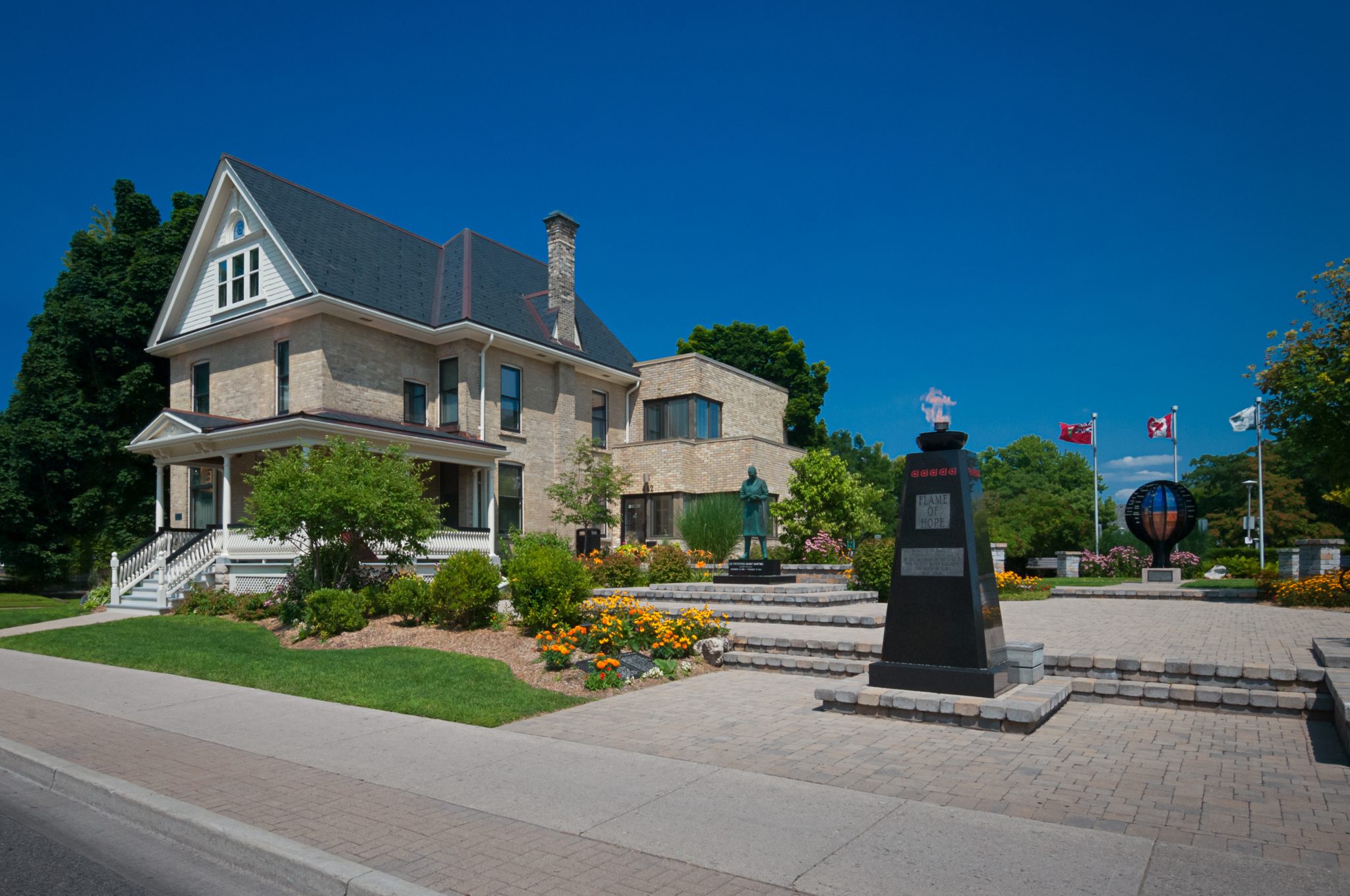
Banting House remains a place of significant local and national history, marking the birthplace of insulin, a contribution that saved the lives of many. We encourage community members to tour Banting House and learn more about the history and the museum by visiting their website: https://bantinghousenhs.ca/